The CTRL / 01
Planning
Follow the schedules, calls, changes in sequences and day movements.
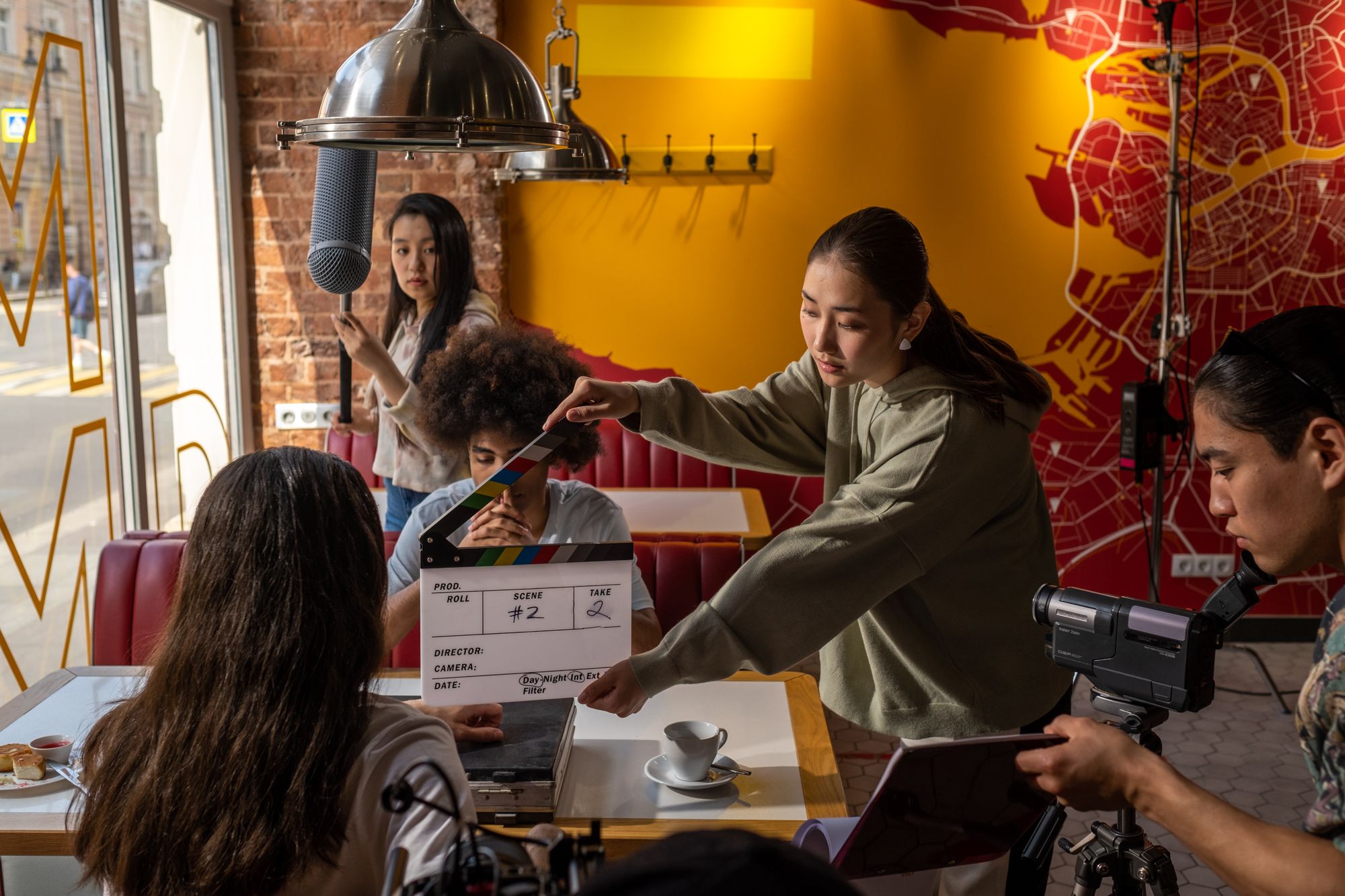
A recording can possess exceptional cameras, a great technical team and a spectacular decor. But someone still has to manage planning, calls, changes, transport, documents, providers, unpredictable and all the information that allows this mechanics to continue to advance. The mobile production office creates a real General District of Screenplay the nearest to the ground.
The Mobile Production Agency for Screening It can become the central point where convergence planning, management, contacts, documents, transport, modifications, communications, decisions and problems to be solved.
A audiovisual production works through a succession of decisions made before, during and after each sequence. The camera represents only a part of this organization. You need to know where the actors are, when the next vehicle arrives, if the lunch is disappeared, which provider should be remembered, if an authorization has evolved, where the next decor will be installed and how the team will go there.
All this information circulates among many people. production direction, directory, assistants, transportation, HMC, costumes, art team, providers, owners and site managers may need to communicate with production at different times of the day.
If this coordination center is installed on a small table in the middle of a passage, in a cafe, in a room, in a car or in a room that needs to be released for the camera, the operation quickly becomes more complicated.
The interest of a mobile base is therefore less spectacular than that of a camera or a large artist lounge. But its impact can be considerable. A good office allows you to work in an identified space, open several documents, take a confidential call, gather a few people and keep the production near the field.
This proximity is important. A production completely away from the plate can lose a part of its reading from the field. On the contrary, a office placed directly in the main passage of technicians risks to be constantly interrupted. Therefore, you need to find the right location: close enough to understand what’s going on, but withstand enough to be able to work.
On some productions, the office can be used mainly by the production management. On others, the director can manage part of its communications. A manager may need a space to make calls. A quick meeting can be organized to decide on the continuation of the day.
This is important: a web page should not promise a number of offices, seats or positions if this capacity has not been confirmed for the unit that will actually be offered.
So we are here in functions. What does production need? How many people have to work simultaneously? How long will they stay in space? Do they need privacy? How many computers will be used? Do paper documents need to be spread? Are meetings scheduled?
These answers allow to determine whether a real mobile office is relevant and which organization should be studied.
A day of cinema can generate an impressive amount of information. hours. addresses. contacts. telephone numbers. service sheets. plans. vehicle lists. artistic information. production documents. planning modifications.
Some information exists on the computer; others circulate by phone; others are printed, recorded, corrected or simply remembered by the people who run the day.
The office’s role is not only to store this information; it must allow to find and transmit it quickly.
A perfectly prepared planning can change in a few minutes. A comedian is delayed. The weather changes. A road becomes difficult to access. A sequence lasts longer than planned. The director wants to change the order of plans.
From this moment, several people need to be informed. Production becomes the point where the new organization is reconstructed.
A mobile office then offers an environment where this reflection can be done without having to look for a new table or work from the seat of a vehicle.
Some calls can be made anywhere. Others require more calmness. A budget discussion, a service provider change, a question concerning an artist or a contractual problem are not necessarily to be heard by all people who pass.
A identified space can create a minimum of confidentiality.
When a problem involves several departments, it may be more effective to gather the people concerned for ten minutes than to organize a long series of separate calls.
Director, manufacturer, assistant, transport and the site manager can meet, look at the same information and go back with a common decision.
The office then becomes a small coordination room, if the unit configuration allows it.
The production office does not replace people who make decisions; it gives them a space to take them.
Follow the schedules, calls, changes in sequences and day movements.
Calling service providers, teams, transport and interlocutors without working in the middle of a permanent traffic.
Meet the persons concerned by an operational change or decision.
Keep a space for computers, documents, lists, plans and information used during the recording.
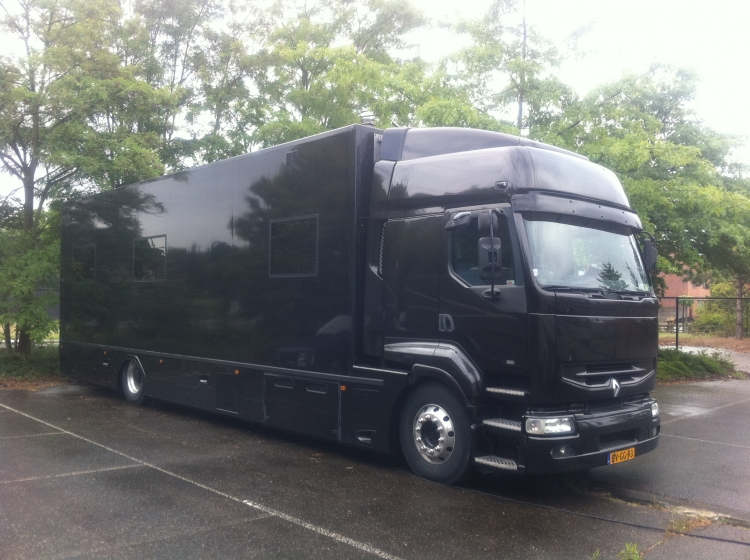
I voluntarily did not post the two photos of the black truck everywhere. Here, a single PROD 19 image serves to remind mobility, while the other visual shows the production work and the decoration.
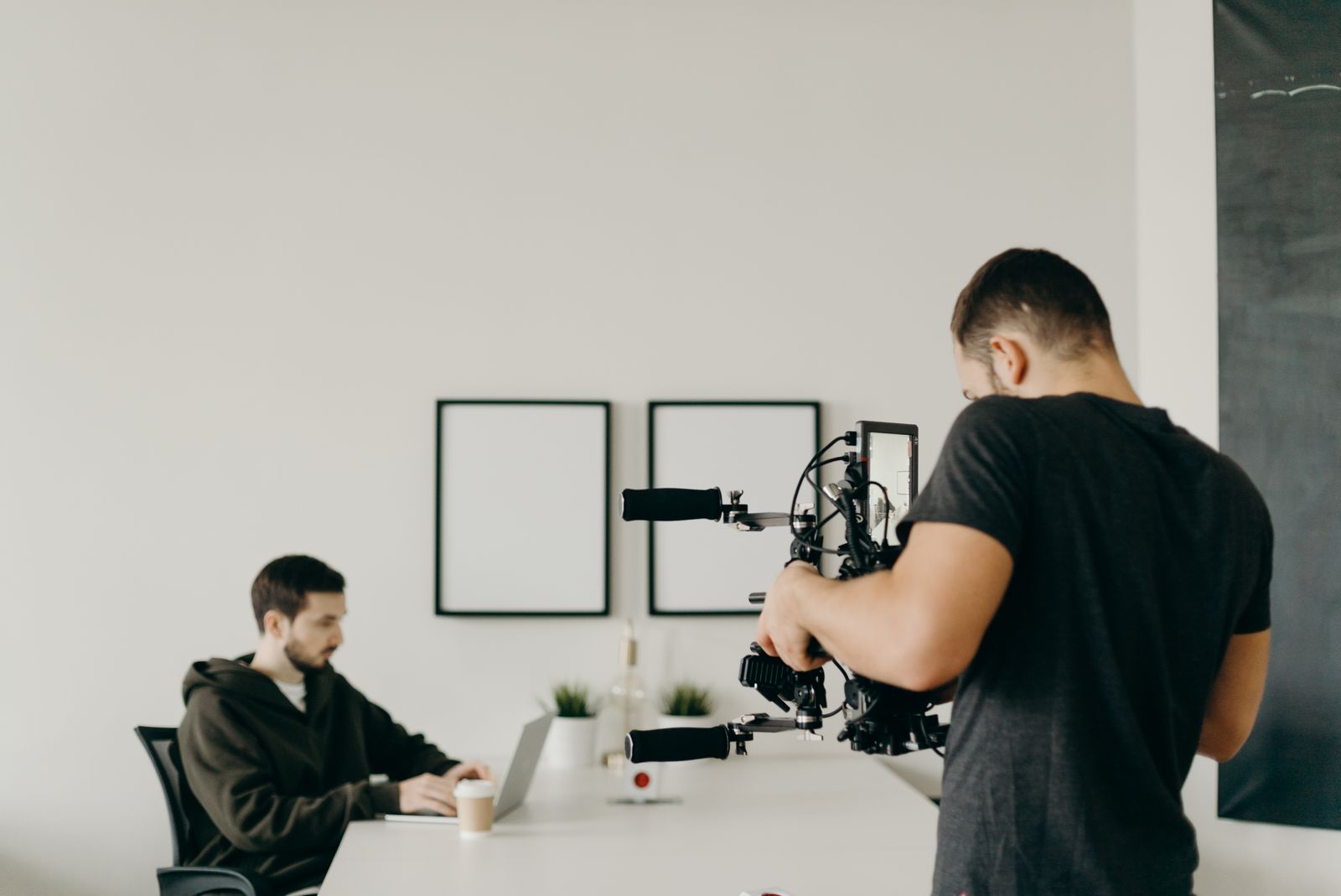

The word “production” can cover many functions, and the organization varies depending on the size of the project. On a small production, the same person can carry out several missions. On a long film or series, responsibilities are more distributed.
The interest of the mobile office is just not to impose a single way of working. The space can be organized around the needs of production present on the ground.
The production management may need to follow the general organization, resources, suppliers, expenses, transport and many operational issues.
A large part of this work passes through the phone and computer. But being physically present on the site also allows you to immediately understand the consequences of a change.
If the day takes a delay, this delay is not just a line on a schedule. It can have consequences on hours, transportation, rental, meals, technicians and the next decor.
It manages practical needs, access, installation, traffic, teams, suppliers and many problems that appear in the day.
Most of the work is going out. But having a point where to find information, charge a phone, watch a plan or perform a quick point can be helpful.
On certain productions, a person may be charged with tracking the information between several teams. He must know where each interlocutor is located and in what order the events should take place.
The office can then serve as a reference point to centralize some of these exchanges.
The assistant may have to update documents, send information, call providers, check lists and process many small requests that keep production in motion.
A computer on the knees in a car works for a few minutes. On twelve hours of work, the situation is different.
It is important to distinguish the interior space from the general operation of the base. A regie often needs material and elements that remain outside. Tables. Cards. Signaletics. Equipment. Circulation.
The mobile office can complete this set by carrying out the function “administrative work and coordination”.
The idea is not to put all the backstage into a vehicle. The idea is to protect the functions that really need an office environment.
When several people work simultaneously, they can also have phones, chargers, documents, booklets and personal objects.
The capacity of a office should not be assessed by simply counting the number of chairs that would be possible to place in it.
A real job must allow the person to work.
A space for several people can very quickly become noise if everyone makes calls.
Do you need a large collective space? do you need a more confidential area? are some people just passing? are others staying all day?
The best configuration is that that corresponds to these uses and not that that announces the most impressive figure.
Computers, documents, phones and information must be ready before the first problems arise.
Artists, transportation, suppliers, regie and plateau begin to generate the first exchanges.
Late, weather, decoration or artistic modification: production reorganizes the succession.
The day is not over, but we have to confirm the next place and the means of the next day.
Production may still have documents, calls and decisions to be processed before closing.

Village, road, domain, property, beach, mountain or natural decor: the cinema chooses a place for what it brings to the image. It is not required to possess a meeting room, a convenient connection, free offices or a room where production can be installed for twelve hours.
Multi-site days are one of the contexts where the preparation of production is important. A first decor can be used in the morning. The team then has to pull a part of the material, lunch, move and take back to a second site.
The second decor should not begin to be organized at the time the last technician leaves the first.
Access. parking. address. local contact. location of the logs. location of the HMC. circulation. hours.
The office can become the point where this information is gathered before the movement.
Depending on the vehicle, the planning and configuration selected, a move can be studied. But a mobile vehicle is not an office that remains operational while it runs.
It is necessary to predict the removal, departure, journey, arrival, maneuver and re-functioning.
If the production needs its office throughout this period of time, it is necessary to anticipate the transition.
On some days, a team can prepare the second decor while the recording continues on the first.
This organization can save time changing site. The office must then know which information remains on the first place and which information must already be transmitted to the second.
A change in decor with multiple vehicles can quickly become disordered if each is looking for his own road.
The address of the next place, the entrance to be used, the restrictions and the parking point must be clearly communicated.
The production office may be the place where this information is prepared and verified before disclosure.
All information about a production should not necessarily be displayed in the middle of the plateau.
Some exchanges may involve budgets, schedules, artistic changes, contracts or situations that must remain between some interlocutors.
Having a closed space can allow you to conduct this type of conversation without having to completely get away from production.
The shooting is a place where many people are moving. Getting a call next to the catering or in a corridor can be perfectly suitable for a simple logistical question.
This is not necessarily the case for a more sensitive subject.
A sequence becomes impossible. the decor must be changed. weather makes the outer plan very uncertain. Many managers have to decide quickly.
A meeting space available on the site, if the office configuration allows, can help to deal with the issue faster.
Digital tools can help prepare the recording information, but they do not replace the physical organization of the field.
The combination is interesting: prepare the needs in advance, and then have a real workplace on the site.
Our page by LogePilotTM It allows just to complete the reflection around the configuration of the logs and the base.
The production need changes greatly depending on the duration, number of people and frequency of changes.
On a several-week film, production accumulates documents, contacts, habits and information. A stable office can become a mark for the team. People know where to find production. Workplaces are not recreated every morning. Documents remain organized according to the team method. This stability can be appreciable when a day is already full of changes.
A series can run for weeks with the same teams and the same functions. The office then becomes more than a temporary space. It can become the center of daily operation. Every person knows his place. Documents are quickly found. Communications with the different departments follow habits that improve the fluidity of production.
A advertising can be short but very dense. Production, customer, agency and performance sometimes have to make decisions quickly. Timer is tight. Validations can evolve. Talents are called on specific lines. A space that allows to work, call and gather a few people can become very useful, even for a single day.
A clip can alter several decorations, looks and configurations. A sequence takes more time than planned. The team may have to change the recording order. A artist comes later. Natural light requires to turn an external plan immediately. Production must transform these constraints into a new organization without losing control of the day.
A shooting can bring together photographer, brand, agency, stylism, HMC, models and assistants. Even with a lighter team than a long-film, a lot of information has to circulate. The mobile office can allow to keep the computers, planning and some exchanges outside the viewing zone.
Some events and festivals may also need a mobile coordination space. Artists, providers, transport, reception and last minute changes generate a significant flow. The configuration must be studied according to the event and not copied directly on that of a film shooting.
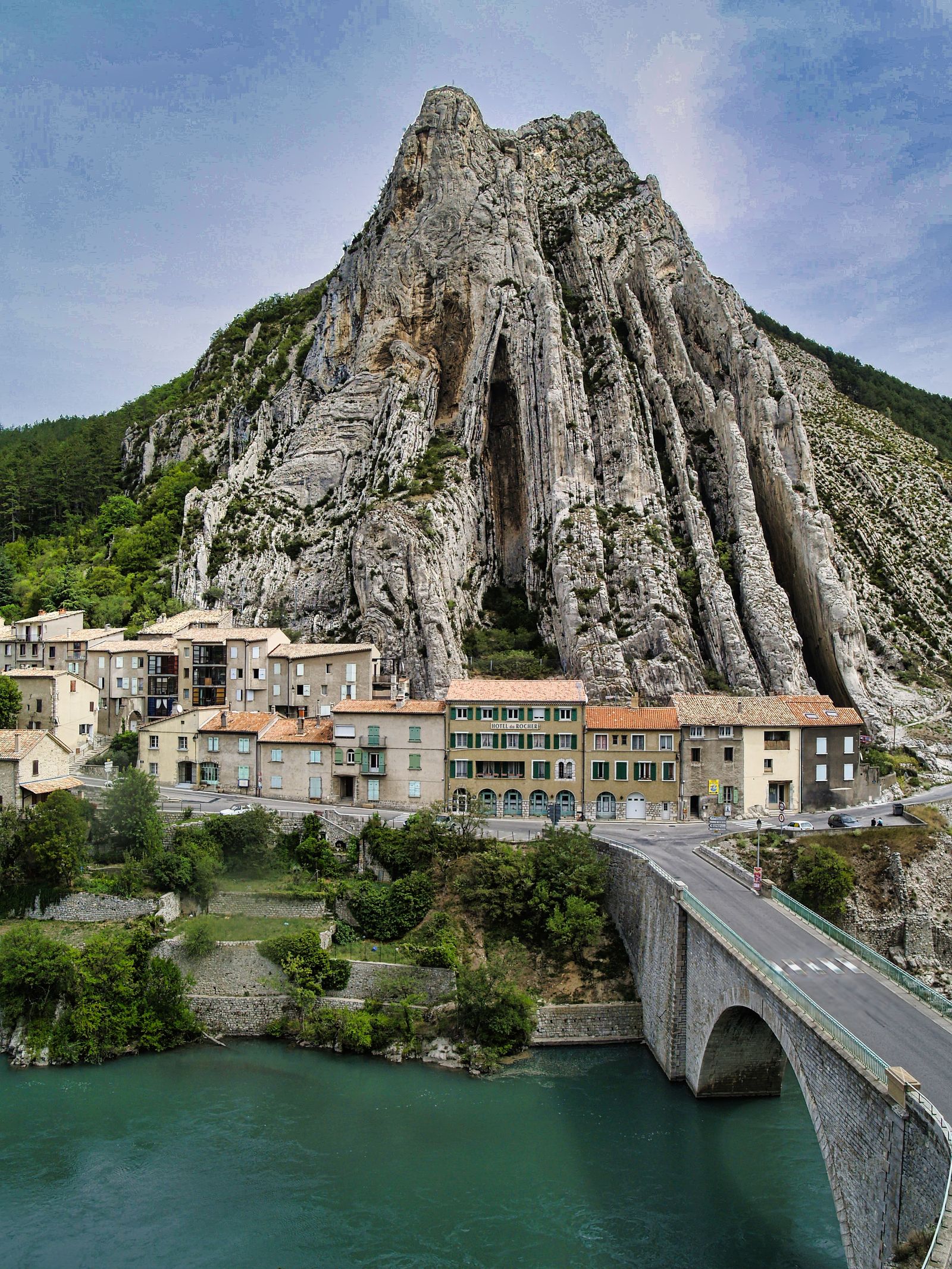
Provence roads, areas, villages and natural landscapes can become magnificent decorations. But the beauty of the place does not guarantee neither office, nor meeting room, nor work space for the production team.
The mobile base allows just to dissociate the needs of the decor from the needs of the people who organize the shooting. The site remains dedicated to the image. The production has its own workpoint.
Study the placeA production office is usually less gourmand than a HMC where several heating devices can work at the same time. but this does not mean that electricity should be ignored.
Computers. Charger. Phone. Screenshots. Impressors. Lighting. Air conditioning. Heating.
The whole needs must be considered according to the unit actually proposed and the material that the production wants to use.
The installation must be prepared in such a way that the main passes are avoided by unprotected cables.
The office must be operational at the time the team starts its work.
Production can spend a large part of the day on the phone. The devices must therefore be able to be charged without each person looking for a pickup in another vehicle.
The accurate availability of the pickings and equipment must be confirmed according to the proposed configuration.
Connection needs may be important, but the quality of the network also depends on where the recording takes place.
A mobile office located in an isolated domain cannot make a mobile cover appear that does not exist.
When the connection is critical, production must therefore anticipate the coverage and the solutions it needs.
The word “office” also means that some people can spend several hours there. Temperature, circulation and the level of burden are therefore really important.
In Provence and southern France, a vehicle exposed to the sun can quickly accumulate heat. Computers, people and equipment also generate heat.
The issue of thermal comfort should therefore be considered according to the vehicle proposed.
On an outdoor shooting in winter, the office can become one of the few spaces where some functions can work in a protected environment.
This stability is appreciable for people who have to read, write or work on a computer for long periods of time.
The office should not be installed anywhere simply because a location is available.
If it is just next to the main electrogen group, a permanent circulation or an extremely noise area, calls and meetings can be more difficult.
On the contrary, it should not be so far away that production loses contact with the plateau.
As for artists, implantation is a search for balance.
How many people do they actually work at the same time?
Computers, phones, printing, documents and other needs must be anticipated.
Check roads, portals, maneuver, parking and the possibility of departing the vehicle.
If the Internet is critical, check the site coverage and prepare the necessary means.
When a production lasts several weeks, the habits take a lot of importance. On the first day, everyone discovers the site. After a few days, people know exactly where to go.
The production office becomes a point of view.The assistants know where to deposit information.The managers know where to find the production.The documents have their place.
This stability reduces a part of daily friction.
The danger of a long installation is the accumulation. Documents. Cartons. Personal effects. Material. Boxes. Charges. Objects that have no real location.
A office that remains several weeks should therefore be regularly reorganized.
Working capacity should not disappear under the accumulation of production.
A important document on the first day may no longer be useful two weeks later.
Keeping everything on the tables because of fear of having it needed again gradually reduces the work space.
The team can therefore set up a logic of archiving or ranking adapted to production.
A night production can start its activity much before the sunshine. The office must be able to be operational for first needs and remain functional until the end of the production tasks.
When the last take is finished, some people still have decisions to make for the next day.
The word “wrap” does not always mean that every person immediately shuts his computer and leaves.
Time. address. weather. transportation. calls. service providers.
Many of these items can be checked before the closure of the office so that you can avoid starting the next day with questions that could have been resolved the previous day.
A production office may contain documents, computers and information that should not be left without organization.
The way the space is safe and used must be adapted to the recording and the vehicle made available.
The office should not be considered as a place where everything can simply be abandoned without control.
The more the office is used as a shortcut, a break room or a passage area, the more difficult it becomes to do a concentration work there.
Production can therefore clearly define the function of space.
A good office must be easy to find without becoming a hall where all production is installed.
This boundary between accessibility and tranquility is one of the keys to an efficient workplace on the ground.
This page voluntarily completes the main production office rental page and references to the other features of the recording base.
This is a mobile solution that allows you to create a workplace for certain production, coordination or management functions directly on the recording site.
It can be used to work on a computer, manage documents, pass calls, track planning, perform coordination points and maintain an identifiable QG.
The number of users depends on the unit and its arrangement.The capacity must be confirmed before booking.
This depends on the workplaces, the drawings and the unit’s layout. Enter the number of users and computers in your request.
Depending on the configuration, a space can be studied for certain production points or meetings. The actual capacity must be confirmed according to the vehicle proposed.
Because the parts of the place may be needed for the camera, decoration or artists. A mobile office allows to separate production from the decoration.
It can complement the organization of the regie by bringing an office space. The external functions of the regie remain naturally organized on the ground.
A long-term installation can be studied according to the vehicle, location, parking, connections and planning.
A series can benefit from a stable production base for several days or weeks.
Yes, especially if production, customer, agency and different interlocutors must be able to work and perform points on the site.
The office can be useful on clips that include multiple decorations, many providers or planning changes.
Yes, if production wants a separate space for computers, documents, planning and coordination.
The needs of the vehicle and the equipment used must be examined before installation.
Connection and coverage depends on the configuration and location. If the Internet is necessary, specify it so that this need is anticipated.
It must be close enough to the plateau to stay connected to the field, but in a way that is enough to allow calls, concentration and meetings.
This depends on access, streets, maneuver, parking and permits that may be needed. The field must be checked before arrival.
Transmit photos or videos of the last kilometre, currents, portal, maneuver area and parking.
A trip can be studied, but it is necessary to predict the removal, the journey, the maneuver and the re-functioning on the new site.
The office should be considered unavailable during the shipping and reinstallation phases.
A closed space can bring more confidentiality than a table installed in a passage. The exact isolation and configuration, however, depends on the vehicle offered.
Yes if the ground allows, but it is necessary to take into account circulation, noise and the different functions of the base.
The office is mainly oriented towards production and coordination work. The life base can group a broader set of functions and spaces.
A comedy lounge is intended for the artist, his expectation and his comfort. The office is a work space for production.
Enter dates, city, address, schedules, approximate number of users, work needs, possible travel and access information.
Applications can be considered according to dates, destination, duration and logistical feasibility.
Long film, series, advertising, clip, shooting or multi-site production: tell us the number of people, work needs, location, timetables and field restrictions. We will study the most consistent mobile configuration with your production.
PROD 19 • to Discover Equally