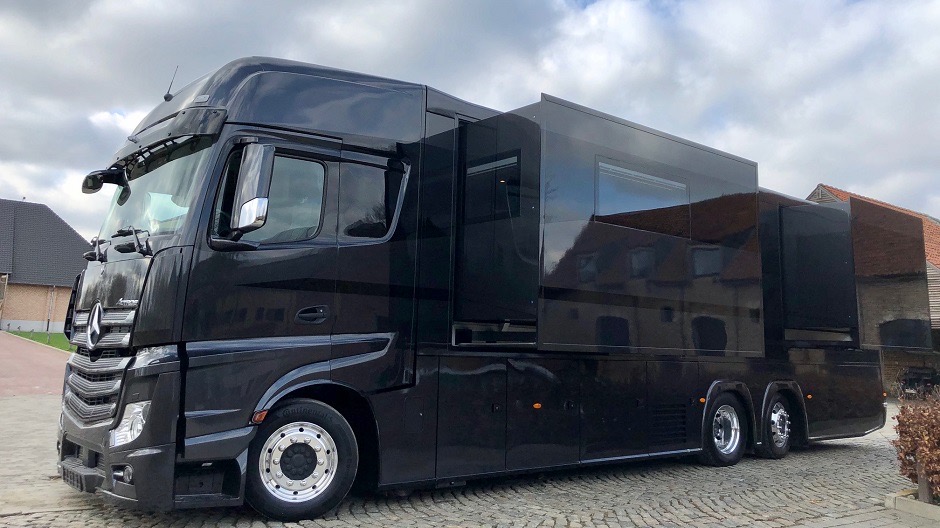
Actors • Artists
Comedian and Artist
Waiting, personal preparation, rest between two take and separate space from the general circulation of the plateau, according to the proposed configuration.

Amsterdam, Rotterdam, The Hague, Utrecht, Eindhoven, Maastricht, North Sea Coastal or Dutch Camp: PROD 19 studies the mobilization of mobile logs for artists, actors, HMC, makeup, hairstyle, costumes and audiovisual productions in the Netherlands.

The Netherlands offers a remarkable concentration of different decorations: channels, historic streets, contemporary architectures, ports, beaches, polders, counties, stations, industrial areas and large infrastructure.
For audiovisual production, this diversity allows to obtain multiple environments in a relatively compact territory.
In Amsterdam, the decoration can be located along a canal, in a narrow street, near a bridge, in a residential neighborhood or in a much more contemporary environment.
A beautiful facade in front of the camera does not mean that a mobile unit can be installed right in front of the door.
Therefore, it is necessary to distinguish the place of viewing and the possible place for the base. The artists' circulation, the distance to the plateau, parking, technical movements and local restrictions must be thought together.
Rotterdam offers almost the reverse image: large axes, modern architecture, waterfront, port, bridges, towers and industrial landscapes.
The Hague combines institutional city, elegant neighborhoods and immediate proximity to the sea. Utrecht offers a historic tissue organized around its channels, while Eindhoven brings a contemporary, technological and industrial identity.
A few dozen kilometers from the metropolitan areas, the landscape still changes: digues, polders, moulin, secondary roads, villages, beaches and large open horizons.
A mobile logue then becomes an organization tool. It can bring a artistic space, a HMC function, a costume area or other needs closer to the plateau, provided that the implantation is realistic.
PROD 19 does not display a permanent presence in the Netherlands. Each project is studied according to dates, duration, exact location, available units and travel from France.
In the Netherlands, the big horizons side to the densest streets. A production can pass from an Amsterdam channel to a futuristic architecture of Rotterdam, then join the sea or the countryside.
A page in the Netherlands must show this diversity: historical architecture, modernity, water, coastal and countryside. It is also that diversity that changes the organization of a filming base.


Strong roads, shores, small bridges, clothes, wet ground, protected areas or limited return space: a Dutch rural decor may require such accurate recognition as a city center.
Artists, actors, makeup, hairstyle, costumes and production each have their own pace. The solution must be studied from this real functioning, and not only the total number of people present.
Waiting, personal preparation, rest between two take and separate space from the general circulation of the plateau, according to the proposed configuration.
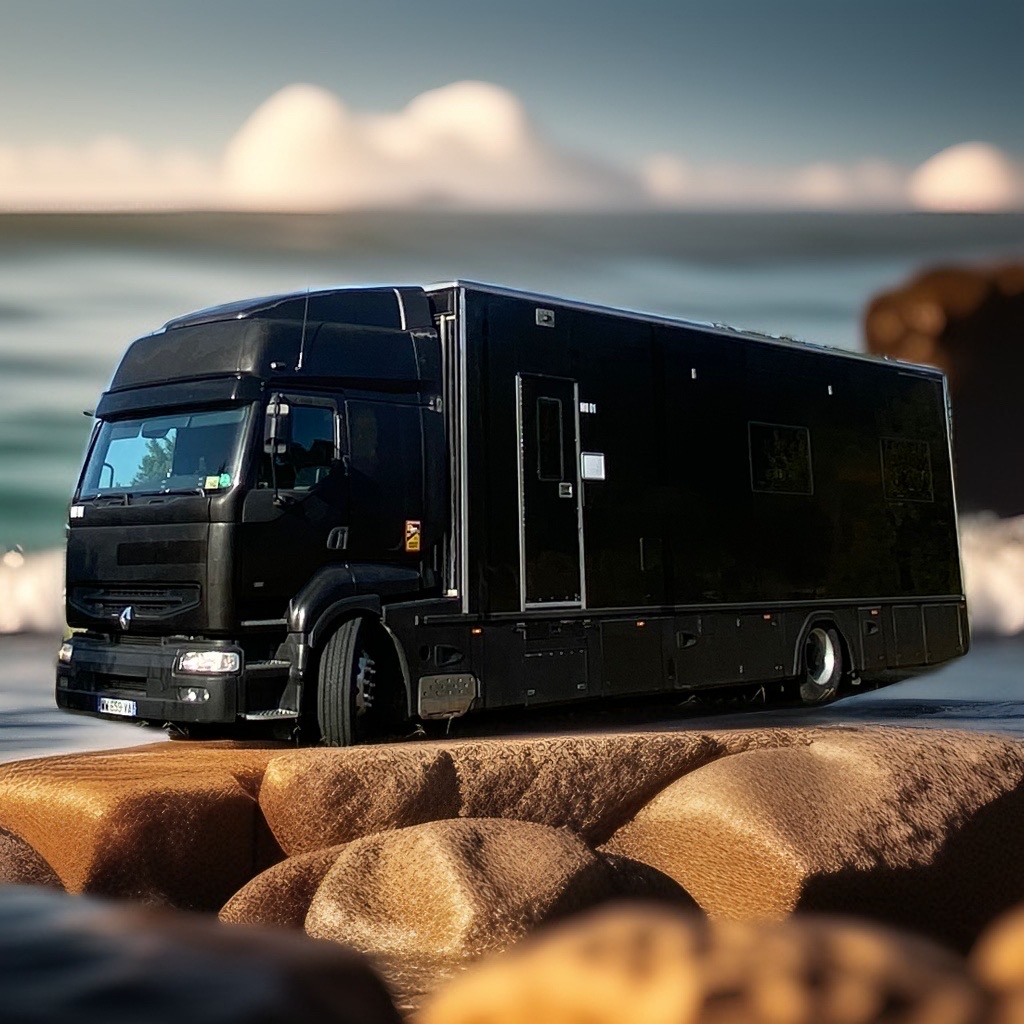
The HMC need depends on the number of people prepared simultaneously, schedules, connections and the real pace of the plateau passages.
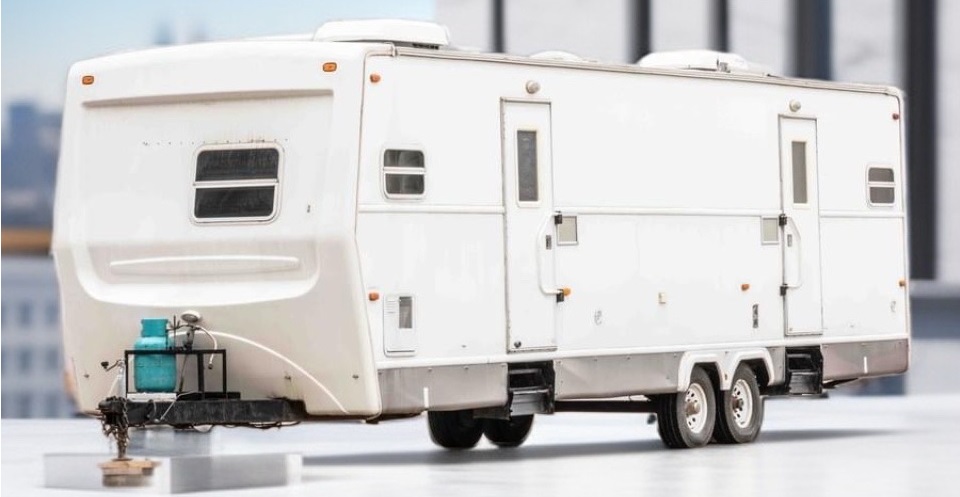
Tenues, portants, changes, accessories and the proximity of the artists can justify a dedicated space.
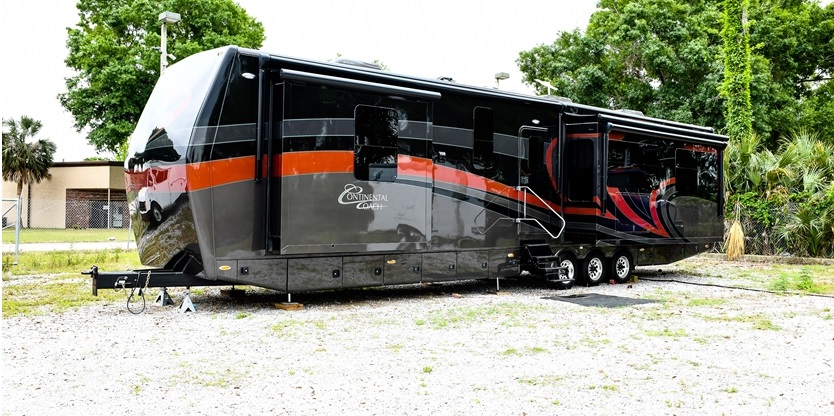
When several functions need to stay close to the decor, the reflection can be on a global mobile organization rather than on one isolated lounge.
The Netherlands allow a production to alter heritage, modern architecture, waterfront, beach and countryside. But each new decor requires a new reading of the implantation.


A page in the Netherlands does not mean that a PROD 19 vehicle is waiting daily in Amsterdam.
Each application must be closer to the available units, their configuration, dates, duration, planning and kilometers necessary to join the first decor.
For a several-day or multiple-stage production, this mobilization may present a very different logic than a isolated demand in a single short day.
Presenting my film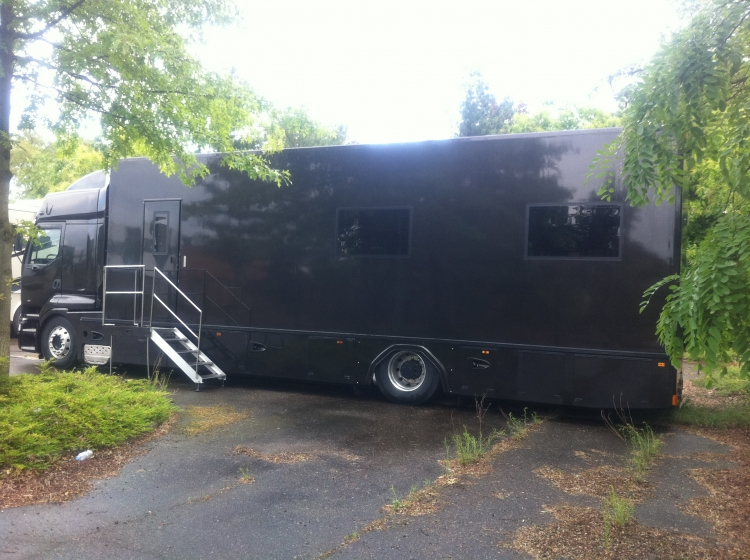
The road network allows for a ground mobilization to be considered, but once arrived in the city, the unit must still be able to reach and exploit the truly planned location.
The location of the base and the location of the base may be different. Therefore, the production must communicate the exact address and the planned location.
Waterfront, port areas, bridges, dense architecture or industrial sectors create different situations. Access must always be checked.
Technical trucks, production vehicles, teams, pedestrian traffic and the movement to the plateau all occupy the same operating space.
Bridge, narrow road, digue road, fragile attachment, turning, portal or turn area can become determining.
For HMC, the number of people to be prepared at the same time is often more useful than the total size of the casting.
A hundred simple meters to walk don’t look like several streets, a bridge or a dense area to cross at each artistic passage.
A day in Scheveningen, on a digue or in an open environment can be very different from a day in the city centre.
PROD 19 does not claim to obtain the declarations, permissions, parking permissions or necessary agreements in place of the manufacturer. The production must check the procedures applicable from the competent local interlocutors.
The relative proximity of cities can facilitate multi-site planning, but the dismantling, moving, access and re-service must remain integrated into the work plan.
Heritage, bridges, water, dense streets, residential neighborhoods and contemporary architectures require a precise study of the base.
Tours, Erasmusbrug, waterfront, industrial areas and large port spaces offer a radically different aesthetics from Amsterdam.
The Hague allows you to pass from the urban environment to Scheveningen, its coastline and its swimming pool universe.
An old urban fabric, low roofs, compact streets and a central position in the country.
A modern and technological identity, interesting for advertising, fashion, innovation and contemporary universe.
Architecture, ancient center, regional roads and relief slightly different from the classic Dutch landscape.
The Dutch page must meet two complementary markets: the French productions that want to work in the Netherlands, and the Dutch companies that come to turn in France.
Amsterdam is of course the main geographical intention to work on a national page dedicated to the Netherlands. its international image, its channels, its facades, its bridges and its highly identifiable neighborhoods make it a searched decor for photography, advertising, clips, cinema, series and brand content.
But the visual force of the city is also its main logistical challenge. streets can be compact, the quests are limited, the traffic is significant and technical parking must be thought well before the arrival of vehicles.
A production should not ask just, “Can you come to Amsterdam?”
It should ideally specify: in which neighborhood, at what address, where the decor begins, where the base can actually be placed, how many artists will circulate between the two and what functions must remain closest to the plateau.
This information allows you to distinguish a need for artistic logue from a need for HMC, costumes or a wider organization.
A advertising campaign, a clip, a fashion production or a film may require an artist-specific space.
The role of this logue is not just to offer an interior. It must integrate into the rhythm of the plateau: calling, preparation, exit to HMC, clothing, waiting and then leaving to the camera.
When the base is at a certain distance from the decor, this path must be calculated. A few minutes repeated several times in the day end up weighing in the production planning.
A Dutch or international production can look for a space for hair and make-up.
The real need depends less on the total number of artists than on the number of people to be prepared at the same time.
A recording with ten talents distributed throughout the day and a recording with five talents called exactly at the same time do not require the same organization.
You also need to look at the connections, the changes in look, the movements towards costumes and the time available between two plate passages.
The costume department may need a separate space when the production includes several characters, frequent changes, silhouettes or a large volume of clothing.
A configuration should then be studied from the actual amount of equipment to be managed and the operation of the department.
Amsterdam offers many universes for international campaigns: mobility, fashion, lifestyle, architecture, technology, tourism, urban culture and premium brands.
A advertising day can focus a lot of preparation on a short period. The presence of an artistic space, HMC or costumes near the decor can help to reduce some unnecessary movements.
Urban heritage, channels, contemporary lines and coastal landscapes allow multiple atmospheres to be chained in the same country.
Fashion and photography often use several clothes and several preparations in a single day. Backstage can thus become a important part of the organization.
The Dutch cities offer very different night atmospheres: reflections on the channels, bridges, contemporary architecture, ports and illuminated neighborhoods.
A night shooting, however, changes working conditions. waiting, temperature, outdoor lighting, team movements and HMC retouches must be considered in the general device.
Rotterdam allows to work a very different intention from Amsterdam. The city combines contemporary architecture, towers, large bridges, waterfront, port areas and industrial heritage.
For a movie, series, car advertising, brand campaign or clip, this visual identity can provide a interesting environment.
Spaces may seem more open than in Amsterdam, but a production should not draw out that any implantation will automatically be simple.
Port areas, cages, infrastructure, regulated access and traffic must be examined by case.
The Hague brings a special combination: big city, institutional architecture and direct access to the coast.
Scheveningen then allows to work with the beach, port, shuttle, sea and large horizons.
For a production, the proximity between city and coast may be interesting. However, it does not cancel the barriers related to wind, sand, parking or access.
Utrecht presents a distinct historical environment from Amsterdam. Its channels, quests and dens urban tissue can create very strong images.
This density involves particular attention to the installation of a major vehicle. When the logue cannot position itself at the immediate contact of the decor, the artists' path must be integrated into the general plan.
Eindhoven offers a different imagination: design, technology, innovation, ancient industrial sites and contemporary architecture.
This identity can fit for car, technology, fashion, lifestyle or corporate campaigns.
A mobile base can be studied depending on the chosen site and the duration of the project.
Maastricht allows to work an atmosphere less immediately associated with the classic image of the Netherlands.
Historic center, architecture, cross-border region and proximity of Belgium can be interesting for a European production that encompasses several countries.
This position also allows you to reflect on routes Belgium → Netherlands or Netherlands → Germany when the recording schedule justifies it.
The iconic Dutch decor is not limited to urban centers. Moulin, channels, polders, digues and large horizons offer a very different visual universe.
On this type of place, the first question is no longer necessarily urban density.
A secondary road can be narrow. A coating may not bear a large vehicle. A area near the water may have a particular soil.
The photos and a video of the last kilometre are then valuable information.
The compact territory can allow a production to work successively in several cities.
Amsterdam, Rotterdam, The Hague or Utrecht can be connected in the same schedule.
But a short distance on a map does not mean that the movement is invisible. The logue must leave its first location, join the next, access the new area and be exploitable again at the right time.
This time must be part of the work plan.
The Dutch market should not be understood only as “send a logue to Amsterdam”.
A Dutch company can prepare a car advertising, a film, a series, a clip or a shooting in southern France.
She can look for an artist trailer, a make-up trailer, a wardrobe solution or a mobile space for her talents while production takes place in Provence, on the Azur Coast, in Marseille, in the Alps or elsewhere in France.
A future Dutch version of the site will allow to work the vocabulary actually used by these professionals, rather than a word-to-word translation from French.
When translation and development in Dutch will be done, the content will have to be adapted to local research.
The version for Dutch professionals should not be a simple mechanical copy of the French text.
It will have to keep the accurate information on PROD 19 while using the expressions actually understood by producers, directors, coordinators, HMC and local technical teams.
The Netherlands naturally complements the first international axis that connects France, Belgium and the northern European markets.
A coherent SEO architecture can thus link the world page, Belgium, the UK, the Netherlands and then gradually Germany, Luxembourg, Switzerland and other markets.
The goal is not to create hundreds of interchangeable pages.
Each country must possess its atmosphere, its cities, its landscapes, its problem-terrain and its research intentions.
National resources for Dutch production, places and audiovisual ecosystem.
The Netherlands Film CommissionMunicipal information to prepare the shootings and views in the capital.
City of AmsterdamLocal speaker for production and recording in Rotterdam.
Rotterdam
Please send us the city, dates, duration, searched functions and available information on the site. PROD 19 will be able to study the real feasibility of mobilization.
Geographic photographs: Wikimedia Commons, according to the licenses indicated on the original sheets. Illustrated landscapes: Amsterdam, Rotterdam, Kinderdijk and Scheveningen. Photos of vehicles, logs and spaces PROD 19 are distinct from geographical illustrations.
PROD 19 • to Discover Equally